
When you dream about opening a pottery studio, you probably imagine a lot of conversations: Conversations about clay bodies. Glazes. Kilns. Classes. Why someone’s mug cracked. Whether that mysterious bucket in the corner is reclaim or something that should have been thrown away six months ago.
But you probably don't imagine quite as many conversations about money.
As soon as you start charging people for memberships, firing, classes, supplies, private events, and everything else that keeps a studio running, you discover something: money can get personal very quickly.
A membership payment fails, and suddenly someone is telling you about losing their job.
Someone owes $47 in firing fees, but they're going through a divorce and their credit card was just canceled.
A class participant thought they had already paid. Someone else forgot their wallet. A member wants to know if they can pay you next Friday. A private event organizer didn't realize the final balance was due before the party.
None of these people are necessarily trying to be difficult. Life is complicated, and money touches an enormous number of those complications.
But you're still running a business.
And that can put studio owners in an uncomfortable position.
You can be compassionate and still have policies
One of the hardest lessons of running a community-oriented business is learning that kindness and clear boundaries aren't opposites.
In fact, clear expectations can make difficult conversations much easier.
Here are a few strategies that can help.
1. Let the policy be the bad guy
Whenever possible, avoid making financial decisions feel personal.
Instead of deciding on the spot whether this particular person should be allowed to attend a class without paying, have a consistent policy that class registration is completed when payment is received.
Instead of personally deciding when someone's outstanding firing balance has gotten too high, establish when firing fees are charged.
A good policy changes the conversation from:
"I've decided that you need to pay me now."
to:
"Here's how our studio handles this."
That small difference can take a surprising amount of tension out of the conversation.
2. Don't over-explain
Awkwardness often makes us talk more. But you don't necessarily need a five-minute explanation for why a balance needs to be paid. Be warm, direct, and matter-of-fact.
"It looks like the payment didn't go through. You'll just need to update your card before your membership can continue."
That's often more than enough.
Giving someone space to explain their situation is kind. But you don't need to solve every financial problem someone shares with you.
3. Give yourself a few ways to say "yes"
Sometimes you genuinely want to make something right or give someone a little flexibility.
Having a few established tools for doing that can help you avoid making up a solution in the middle of an uncomfortable conversation.
Maybe that's a refund. Maybe it's studio credit. Maybe it's a gift card they can use later.
You can be flexible without making every situation an exception that you have to remember forever.
The easiest money conversation is often the one you don't have to have
There's another way to make these conversations easier: remove yourself from as many routine payment interactions as possible.
If your studio has 20 members, manually collecting membership dues might not seem like a big deal.
At 100 members, it becomes a job.
And every manual payment is another opportunity for an uncomfortable conversation.
That's one of the reasons we built billing automation into Kiln Fire. The goal isn't to remove the human side of running a pottery studio. It's almost the opposite.
We want software to handle more of the routine transactions so your staff can spend their time on the interactions that actually benefit from having a human involved.
Memberships can bill themselves
Kiln Fire memberships are billed automatically on the schedule you establish.
If a payment fails, you don't immediately have to track down the member and ask for another credit card. Kiln Fire can follow up with them multiple times, asking them to update their payment method so the payment can be retried.
In many cases, the problem gets resolved without a staff member ever needing to get involved.
That's better for the studio, and it's often less embarrassing for the member too.
Firing fees don't have to become a running tab you chase down
Firing is another area where studios can accidentally become debt collectors.
A member drops off some work. it gets measured. They write down the amount. You enter it into a spreadsheet and send an invoice for the total. Months later you notice that the member still owes $83.50 and has to ask them to pay it.
Kiln Fire can make that process much more automatic.
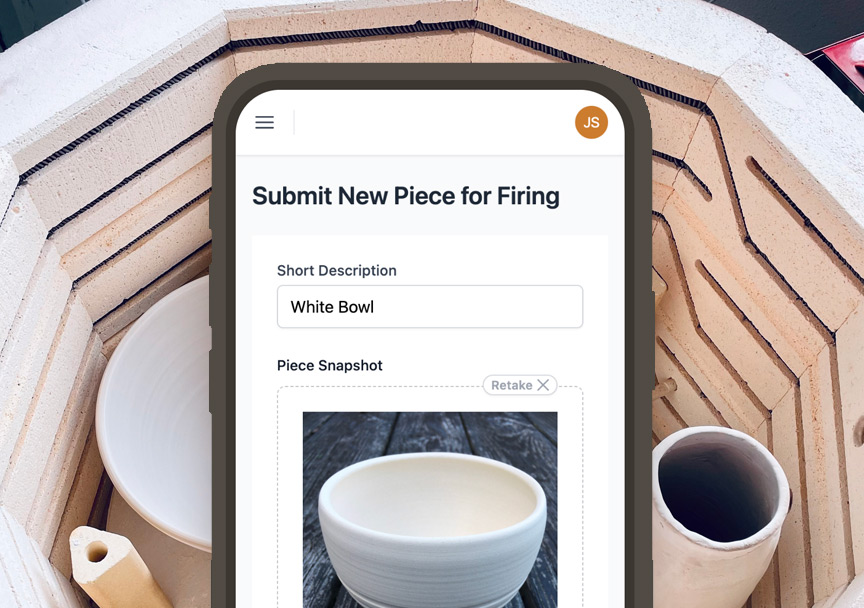
Studio users can submit their own pieces, and you decide how frequently your studio bills outstanding firing fees: weekly, every other week, or monthly.
Instead of staff repeatedly asking, "Did you pay for those pieces yet?", billing becomes part of the studio's normal process.

Classes are paid before class starts
The first ten minutes of a pottery class are valuable.
They shouldn't be spent checking people out a the front desk and running credit cards.
With Kiln Fire, students register and pay online before they arrive at the studio. Your instructor can welcome everyone, introduce themselves, and start teaching instead of becoming the cashier at the beginning of class.
It also sets a clear expectation: registering for a class means reserving and paying for your spot.
Private event pricing is clear from the beginning
Private events can create especially complicated money conversations.
"How much will this cost?"
"Is the deposit refundable?"
"Why does it cost more with 18 people?"
"When do I have to pay the rest?"
Kiln Fire's private event pages give studios a place to explain pricing, including the factors that can affect the final cost. Studios can also collect deposits and payments online.
That means your customer has a clearer idea of what they're agreeing to before the event is booked—and your staff doesn't have to explain the entire pricing structure from scratch every time someone inquires about a birthday party.
And when something goes wrong, you have options
Automation doesn't mean rigidity.
There will still be times when you decide that the right thing to do is give someone their money back or make an adjustment.
Kiln Fire gives studios a structure for handling those situations.
You can issue a traditional refund, refund money to a gift card, or add account funds for the customer to use on future purchases at your studio.
Account funds can be particularly useful when you want to make something right while keeping the value with the studio. Instead of inventing an informal promise like, "Just remind me next time and we'll take $25 off," the credit is actually attached to the person's account and can be used toward a future payment.
That's easier for your staff and clearer for the customer.
Automation isn't about making your studio less personal
Pottery studios are unusually personal businesses.
People spend hours there. They make friends there. They bring their kids. They take classes after difficult weeks at work. They celebrate birthdays. They make wedding gifts. They sometimes stay for years.
You don't want to automate that part.
But collecting a declined credit card?
That doesn't need to be the personal part of the relationship.
The more your studio grows, the more important it becomes to decide which interactions deserve your time and attention—and which ones can simply happen reliably in the background.
Let software send the payment reminder.
Let it collect the firing fee.
Let it process the class registration.
Then when your members and customers talk to you, hopefully you can spend a little more of that time talking about clay.